Euro Stablecoins Explained: EURC, EURCV and MiCA Rules for Beginners
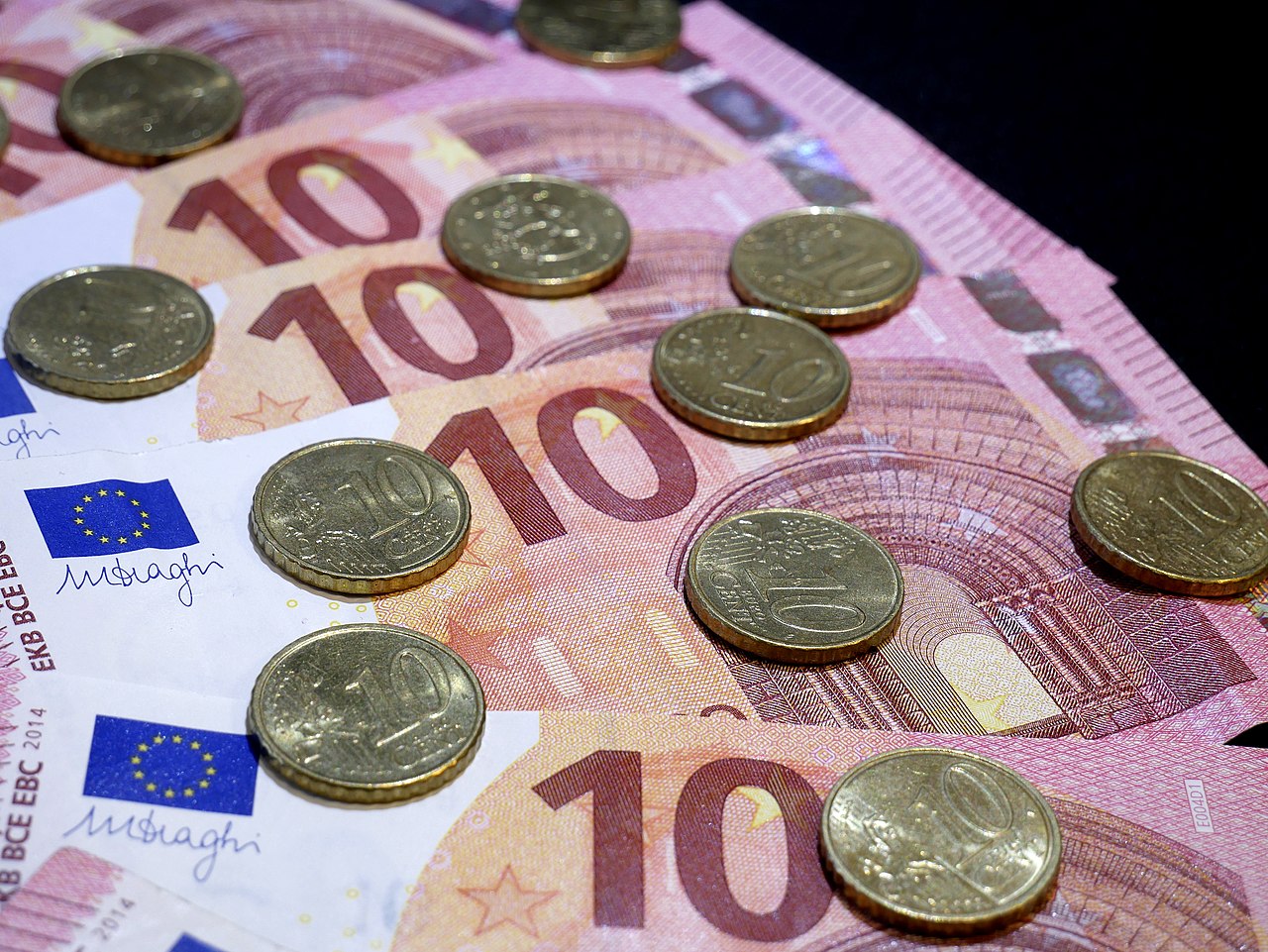
Photo: Santeri Viinamäki / Wikimedia Commons, CC BY-SA 4.0

Most crypto beginners start with bitcoin, but sooner or later they meet stablecoins: tokens that aim to stay worth exactly one unit of a normal currency. In Europe, the ones that matter most are euro stablecoins such as Circle's EURC or Société Générale-FORGE's EURCV.
Since the EU's crypto law MiCA took effect, euro stablecoins have their own rulebook. This guide explains what a euro stablecoin is, what MiCA promises you as a holder, what it does not, and how to check a token before you buy it.
Important disclaimer
This article is general information, not financial, investment, legal or tax advice. Stablecoins can lose their peg, platforms can fail, and blockchain transfers sent to the wrong address cannot be reversed. Nothing here recommends a specific token or provider. Links marked "affiliate link" may earn Advice Me a commission; check the costs, risks and availability in your country before you sign up anywhere.
What is a euro stablecoin?
A euro stablecoin is a crypto token designed to be worth €1. Unlike bitcoin, the goal is not to rise in value but to stay flat.
MiCA (the Markets in Crypto-Assets Regulation, EU 2023/1114) calls a token that references a single official currency an e-money token (EMT). The rules for EMTs have applied since 30 June 2024. Our MiCA guide covers the wider law.
Under MiCA, an e-money token may only be offered to the public in the EU by an authorised credit institution (a bank) or an electronic money institution. The issuer must publish a white paper, invest the funds it receives in secure, low-risk assets in the same currency, and keep recovery and redemption plans in case it gets into trouble.
What MiCA gives you as a holder
Two articles of MiCA matter most for ordinary users:
- A claim against the issuer, redeemable at par (Article 49). Holders have a claim against the issuer. On request, the issuer must redeem the token "at any time and at par value", meaning one euro per token, paid in funds other than e-money. Redemption may not be subject to a fee, with a narrow exception for recovery situations.
- No interest (Article 50). Neither the issuer nor a crypto-asset service provider may pay you interest on an e-money token. MiCA treats any reward linked to how long you hold the token as interest.
One practical catch: the right to redeem is against the issuer, and issuers often deal directly only with business customers. Circle, for example, describes Circle Mint as its service for business customers to mint and redeem USDC and EURC. As a private person you will usually buy and sell through a platform, so its spread and fees still matter.
Also remember that a stablecoin is not a bank deposit. Under EU e-money rules, funds exchanged for e-money do not count as deposits, so the protection comes from the issuer's reserves and the MiCA rules, not from a deposit guarantee scheme.
Which euro stablecoins exist?
When we downloaded ESMA's interim MiCA register on 20 October 2026, it listed white papers from 25 e-money token issuers, covering euro and other currencies. Two of the best-known euro tokens:
- EURC (Circle). Circle announced on 1 July 2024 that its French entity had received an electronic money institution licence from the ACPR, France's banking supervisor, and that EURC and USDC were being issued in line with MiCA. DefiLlama showed about 439.7 million EURC in circulation on 20 October 2026.
- EURCV (Société Générale-FORGE). The digital-assets subsidiary of Société Générale is also listed in the register under ACPR supervision. Its own CoinVertible page showed about 169.1 million EURCV in circulation on 20 October 2026.
Bank euros, stablecoins and the digital euro compared
| Question | Euros in a bank account | MiCA euro stablecoin (EMT) | Stablecoin with no EU-authorised issuer | Digital euro |
|---|---|---|---|---|
| Who issues it | Your bank | An authorised bank or e-money institution | A company outside the MiCA regime | Planned by the ECB, not issued yet |
| Your claim | A deposit at the bank | A claim on the issuer, redeemable at par | Depends on the issuer's own terms | Would be central bank money |
| Deposit guarantee | Yes, within the legal limits | No, it is not a deposit | No | Not applicable |
| Interest | Possible | Banned for the issuer and for crypto service providers | No MiCA protection either way | Not issued yet |
| Available on EU crypto platforms | Via SEPA deposits | Yes | Not for trading or purchase since early 2025 | No |
| Moves 24/7 on a blockchain | No | Yes | Yes | Not a crypto token |
Why some stablecoins disappeared from EU platforms
On 17 January 2025, ESMA, the EU securities regulator, told crypto-asset service providers to stop making non-compliant stablecoins available for trading, meaning tokens whose issuer is not authorised in the EU. National supervisors were to ensure compliance no later than the end of the first quarter of 2025. That is why some well-known dollar stablecoins vanished from the buy menus of EU platforms.
A second deadline followed: the MiCA transitional period for crypto service providers ended on 1 July 2026. In a statement of 23 June 2026, ESMA said unauthorised providers must stop onboarding new EU clients and wind down, and that providers based outside the EU cannot serve EU clients. If you hold stablecoins on a platform, check that the platform itself is in ESMA's register too.
Where beginners actually use euro stablecoins
- Between trades. Selling bitcoin into a euro stablecoin keeps the value in euros without a bank withdrawal.
- Moving money between platforms. A transfer on a blockchain can arrive at weekends, when a bank transfer might wait. Always check the network: the same token can exist on several blockchains, and the sending and receiving side must match.
- Self-custody. You can hold stablecoins in a wallet where only you control the keys. Some euro accounts combine both worlds. Deblock (affiliate link), for example, is a French app that offers an IBAN account and a self-custody crypto wallet; it is listed in ESMA's register as a crypto-asset service provider authorised by France's AMF and is also an e-money institution supervised by the ACPR. Its website advertises yields via "EURC vaults" but also states that its access to decentralised finance is not governed by MiCA, a reminder that a stablecoin "yield" is never MiCA-protected interest and carries extra risk.
A five-point check before you buy
- Find the issuer. Look up the token's issuer in ESMA's interim MiCA register (the e-money token file) on the ESMA MiCA page.
- Read the redemption section of the white paper: who can redeem directly, how and how fast.
- Check your platform in the same register's list of crypto-asset service providers.
- Treat "yield" offers carefully. MiCA bans interest on e-money tokens, so any return comes from something else, such as lending or DeFi, with its own risks.
- Mind the tax. In Germany, the Federal Ministry of Finance's letter of 6 March 2025 treats swapping one crypto-asset for another as a disposal. Swapping bitcoin into a stablecoin can therefore realise a taxable gain if you held the bitcoin for less than a year.
What about the digital euro?
The digital euro is a different project: central bank money planned by the European Central Bank, not a crypto token from a private company. The ECB says that if EU lawmakers adopt the regulation in the course of 2026, the digital euro could be issued during 2029. Until then, euro stablecoins are the main way to hold euros on a blockchain.
Bottom line
A MiCA-compliant euro stablecoin gives you a claim on an authorised issuer, redeemable one-to-one and without a redemption fee, but it is not a bank deposit and it may not pay interest. It is a practical tool for moving euros around the crypto world, not a savings account. Check the issuer and the platform in ESMA's register, read the redemption terms, start with a small test transfer, and be sceptical of any stablecoin "yield".
Sources
- ESMA Interactive Single Rulebook: MiCA Article 49, issuance and redeemability of e-money tokens
- ESMA Interactive Single Rulebook: MiCA Article 50, prohibition of granting interest
- ESMA: Guidance on non-MiCA compliant ARTs and EMTs (stablecoins), 17 January 2025
- ESMA: Public statement on the end of the MiCA transitional period, 23 June 2026 (PDF)
- Circle: Circle is first global stablecoin issuer to comply with MiCA, 1 July 2024
Advice Me publishes general information only. It is not financial, investment, legal, or tax advice. Always do your own research and consult a qualified professional before making financial decisions.
Comments
Post a Comment